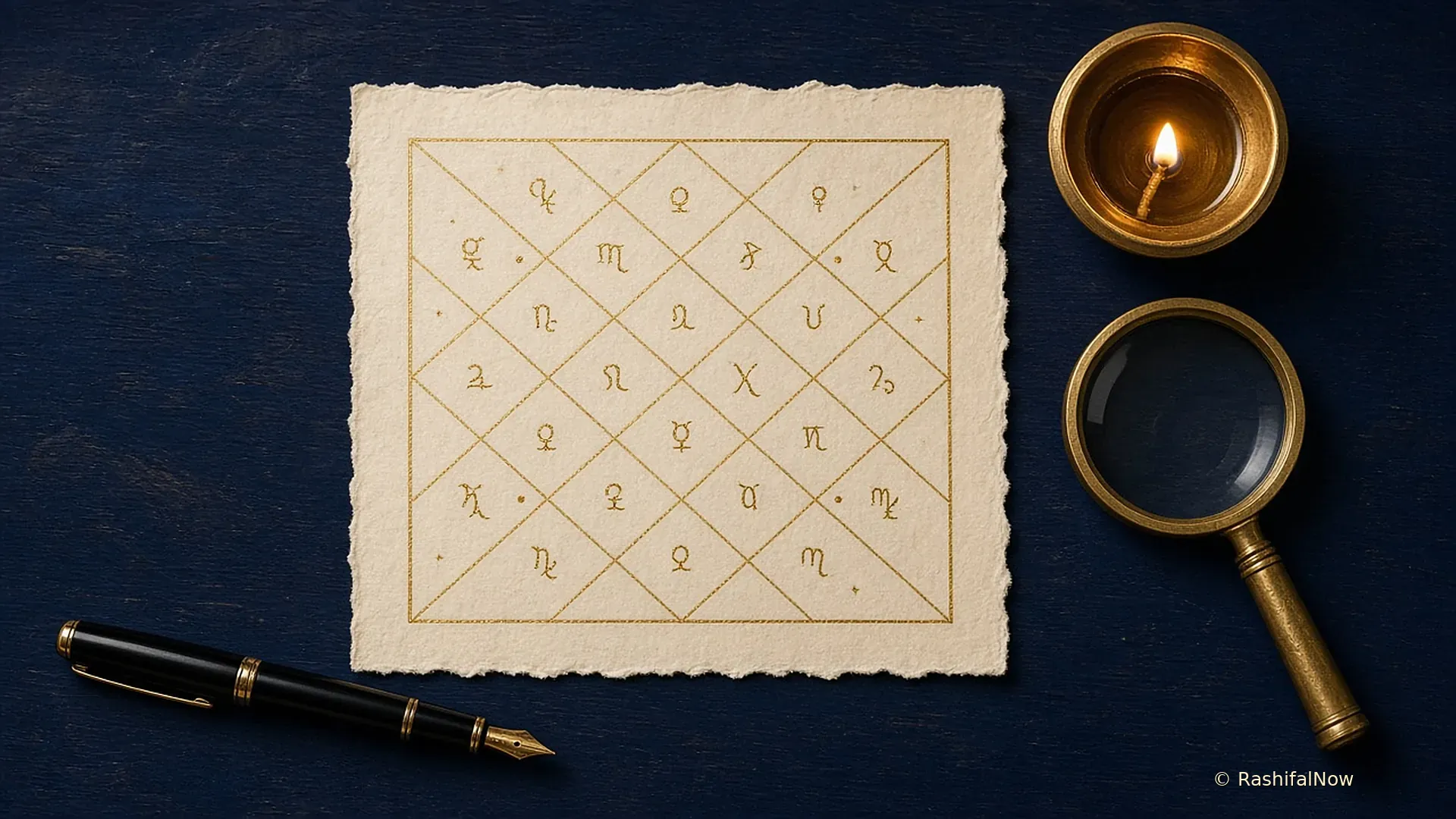
Twelve houses, nine planets and a lot of lines. This friendly walkthrough explains the essentials of a Vedic birth chart.
A kundli can look intimidating at first: a square divided into diamonds and triangles, filled with abbreviations and numbers. Once you understand the structure, though, it becomes a surprisingly intuitive map.
The twelve houses
Each section of the chart is a house (bhava) representing an area of life — self, wealth, siblings, home, creativity, health, partnership, transformation, fortune, career, gains and release. In the North Indian style, the top central diamond is always the first house.
The nine planets
Vedic astrology works with nine grahas: Sun, Moon, Mars, Mercury, Jupiter, Venus, Saturn and the lunar nodes Rahu and Ketu. Where each sits — by house and by sign — colours how its themes play out in your life.
The ascendant
The sign rising on the eastern horizon at your birth becomes your lagna, the starting point of the chart. It is the reason accurate birth time matters so much.
Dashas: the timing layer
The Vimshottari dasha system divides life into planetary periods. Knowing which period you're in helps an astrologer describe why certain themes feel stronger at certain times.
- Start with your lagna and moon sign.
- Note which houses hold several planets — these areas are emphasised.
- Look at your current dasha for the season of life you're in.
You don't need to master everything at once. A good astrologer will walk you through your chart and translate it into practical, relevant guidance.
Written by the RashifalNow editorial team. Astrology content is for guidance and entertainment purposes.